
WordPress runs everything from one-page brochure sites to large publishing and corporate sites, so for a bigger organization the question is rarely whether it can cope. The real question is how to set it up so that dozens of editors, several brands, integrations with other systems and a security review can all live with it. Choosing WordPress for enterprise work means deciding early on the structure of the installation, the front-end architecture, who can do what, and how code moves from a developer's laptop to the live site. Those four decisions are hard to change later, and they are the subject of this guide.
What WordPress for enterprise actually requires
"Enterprise" is less about traffic than about organization. A typical list of requirements looks like this:
- Many editors with different permissions, and an approval step before publishing.
- Several sites, brands, regions or languages managed together.
- Sign-in through the company's identity provider, and prompt removal of people who leave.
- Integrations with a CRM, marketing automation, search or internal systems.
- A documented deployment process, with code reviewed before it goes live.
- Clear answers for the security and IT teams: who hosts it, who patches it, where the logs go.
One installation or many: WordPress Multisite
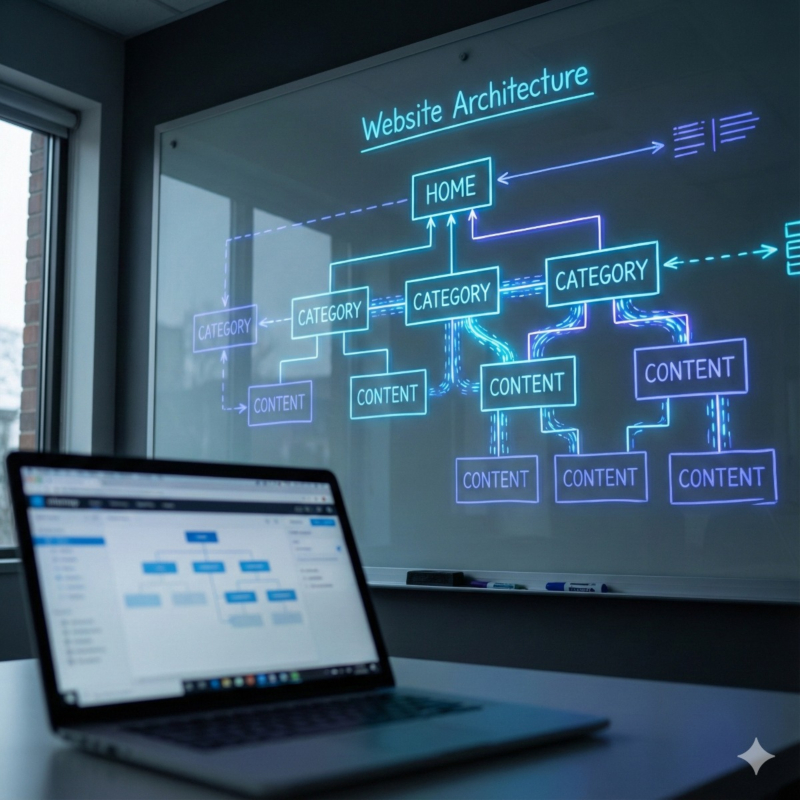
WordPress Multisite turns one installation into a network of sites that share the same core files, themes and plugins. A network administrator (the Super Admin) installs software once and decides which themes and plugins each site may use, while each site keeps its content in its own database tables. User accounts are shared across the network, and one person can hold different roles on different sites.
| Question | Multisite network | Separate installations |
|---|---|---|
| Updates | Once for the whole network | Per site, usually scripted |
| Shared design and components | Natural: one theme or parent theme for all sites | Possible through a shared code package |
| Isolation | A faulty plugin or update can affect every site | A problem stays on one site |
| Plugin choice | Only plugins that support Multisite properly | Any plugin on any site |
| Hosting and scaling | One database and codebase sized for all sites | Each site sized and hosted on its own |
Multisite suits groups of similar sites run by one team, such as regional or franchise sites on a common design. Brands with different teams, release schedules or compliance needs are usually happier on separate installations.
Traditional, hybrid or headless WordPress
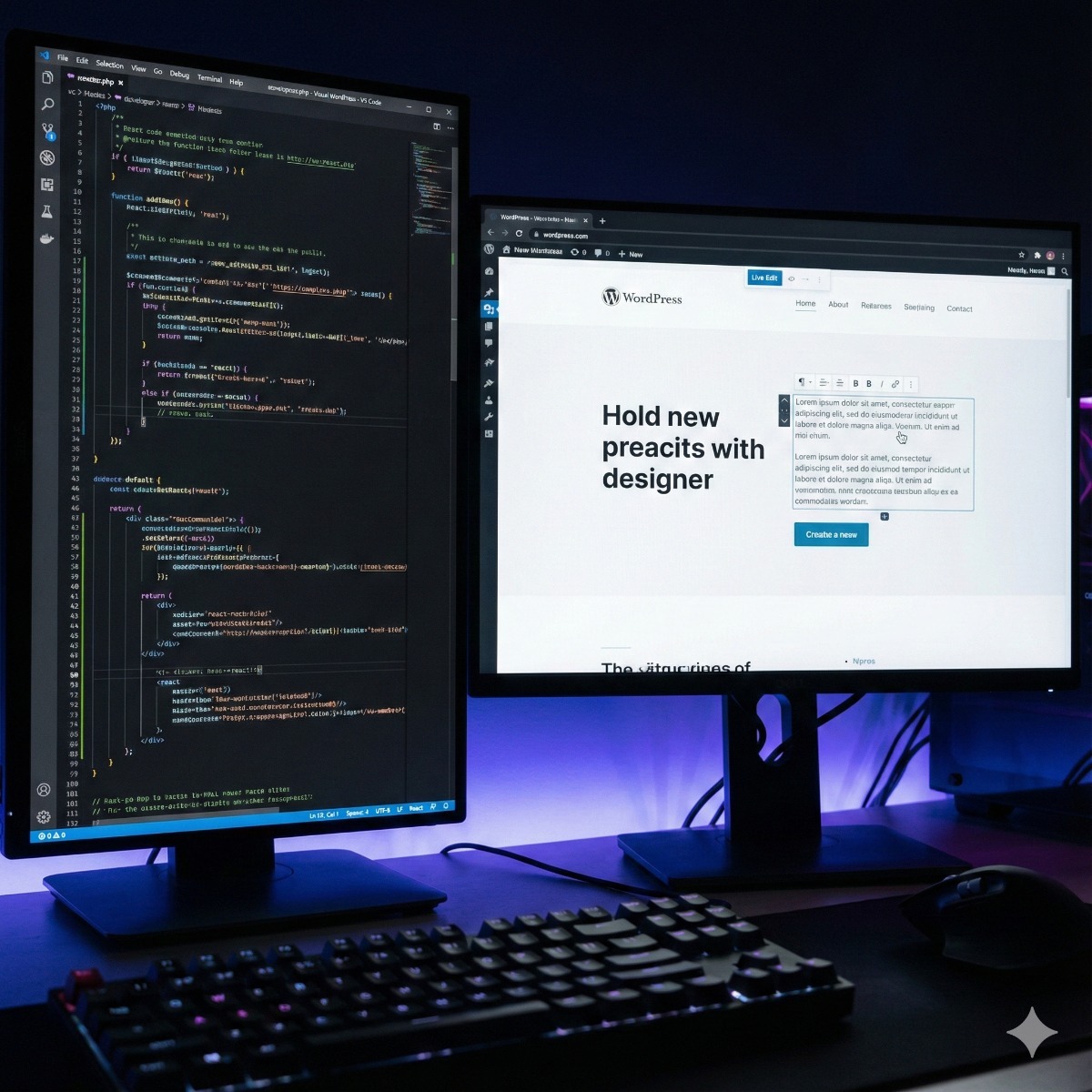
In a traditional build, WordPress stores the content and also renders the pages through its theme. Headless WordPress keeps the editing side and hands content to a separate front end, often built in React, through the WordPress REST API that ships with core, or through a GraphQL plugin. That gives the front-end team complete control and lets one content source feed a website, an app and other channels.
Headless also has its own costs. Previews need extra work, and plugins that output something on the page, such as forms, SEO metadata or cookie banners, no longer do so automatically, so the front end has to rebuild those features. You also host and maintain two applications instead of one. For most corporate sites, a traditional or hybrid build, with a custom theme and a few React components where they add real value, delivers the performance without the overhead. Headless earns its place when several front ends or an app need the same content.
Governance: WordPress user roles and single sign-on
WordPress user roles come in a default set: Administrator, Editor, Author, Contributor and Subscriber, plus Super Admin on Multisite. Each role is a bundle of capabilities, described in the roles and capabilities documentation, and custom roles can be created for jobs such as a legal reviewer or a product editor. Two rules keep the list under control: very few administrators, and no shared logins.
WordPress single sign-on connects the login to the company's identity provider, such as Microsoft Entra ID or Google Workspace, through SAML or OpenID Connect plugins. Editors sign in with their work account and its multi-factor authentication, and disabling someone in the directory removes their access to the site as well. Integrations should not use a person's password at all: WordPress offers application passwords for REST API access, which can be tied to a service account, named and revoked one by one.
A staging workflow with version control
In a well-run WordPress staging workflow, code and content move in opposite directions. Code, meaning the theme, custom plugins and the list of third-party plugins with their versions, travels from development to staging to production. Content is created on production and copied back to staging when testers need realistic data, with personal data such as customer records removed on the way.
- WordPress version control covers the theme, custom plugins and configuration in Git. Third-party plugins are pinned to specific versions, often through Composer, instead of being updated by clicking in the admin panel.
- Deployments are scripted, so the same steps run every time and there is a way back if something fails.
- A block theme keeps design settings in theme.json and reusable layouts as patterns, which also live in version control. Editors get locked patterns for the pages that matter most and cannot break the layout.
- WP-CLI handles repeatable tasks such as database search and replace or cache flushes.
Our custom WordPress development projects follow the same order: the data structure is mapped first, development happens in a staging environment, and the finished site is then moved to the live server.
Frequently asked questions: wordpress for enterprise
Is WordPress secure enough for enterprise use?
WordPress core has a dedicated security team, and minor security releases install automatically by default. Most real incidents come from outdated or poorly written plugins, weak passwords and neglected updates, so keeping plugins few and well maintained, enforcing single sign-on or multi-factor login and applying updates on a schedule matter more than the platform itself. Our website maintenance and care plans cover that routine.
Should we choose Multisite or separate installations?
Multisite when the sites share a design, a team and a release schedule. Separate installations when they do not, or when a problem on one site must never affect another.
Does headless WordPress hurt SEO?
Not by itself. Search engines need complete HTML, correct metadata and fast pages. A headless front end that renders pages on the server and outputs titles, canonical tags and structured data can do well; one that builds everything in the browser, or forgets the metadata, will struggle.
Can WordPress run a company intranet?
Yes, with every page behind a login, single sign-on and search engines kept out. Custom post types for policies, people or locations turn it into more than a blog.
Planning a larger WordPress build, or tidying one that grew without a plan? Our enterprise WordPress development page describes how we work with custom themes, ACF Pro, custom post types and integrations with CRMs and payment gateways. Get in touch with a list of the sites, page types and systems involved, and we can discuss the structure that fits.