
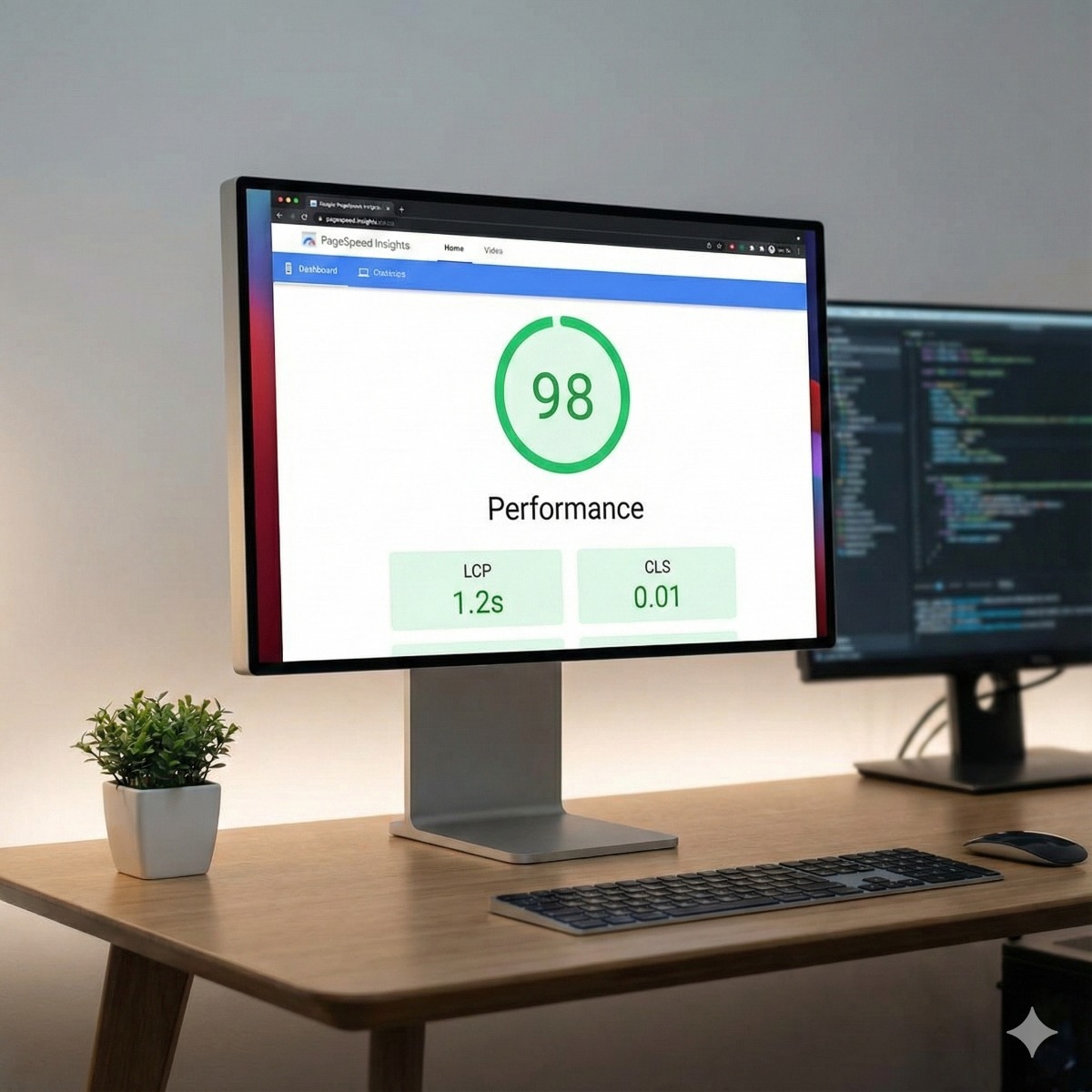
Core Web Vitals & Performance Tuning
Instant Load.
Higher Rank.
Speed is a ranking factor. A slow website frustrates users and gets penalized by Google. We optimize your code, images, and server delivery to achieve passing "Green" scores on Core Web Vitals.
LCP (Loading)
Largest Contentful Paint. Your main content must load in under 2.5 seconds. We use advanced caching, Code Splitting, and lazy-loading to make your site appear instantly.
CLS (Stability)
Cumulative Layout Shift. Elements shouldn't jump around as the page loads. We fix "visual glitches" by reserving space for images and ads, ensuring a stable, professional user experience.
INP (Interactivity)
Interaction to Next Paint. When a user clicks a button, the site should react immediately. We remove bloated JavaScript execution to reduce server response time and delay.
The Optimization Sprint.
From slow to pro in 4 steps.
Deep Audit
We run your site through Lighthouse and GTmetrix to identify the bottlenecks. Is it huge images? Slow hosting? Bad plugins? We find the root cause.
Asset Compression
We convert heavy PNG/JPG images to next-gen WebP formats, reducing file size substantially without losing quality. We also minify CSS and JS files.
Server Caching
We configure Redis or Memcached on your server and implement page caching. This serves a static HTML copy to visitors, eliminating database lag.
CDN Delivery
We connect your site to a Content Delivery Network (Cloudflare or Fastly), ensuring your assets are loaded from a server closest to your visitor's location.
What We Optimize.
Comprehensive performance tuning.


Tools We Use.
Industry standard optimization.
Common Questions
Will this break my site layout?
No. We work in a staging environment first. We safely test minification and deferring scripts to ensure functionality remains perfect before pushing live.
Can you guarantee a 100/100 score?
We aim for a significant improvement (often into the green 90-100 zone). However, some third-party trackers (like Facebook Pixels) may prevent a perfect 100.
Lab scores versus field data
Google PageSpeed optimization often starts with the wrong number. The score at the top of PageSpeed Insights comes from a lab test on one simulated device; what Google uses in search is field data from real Chrome users, gathered over the previous 28 days and shown in Search Console. We work on the metrics your visitors actually experience and confirm the results in field data, which is why improvements take a few weeks to show up there.
How we fix an LCP issue
Largest Contentful Paint is usually a hero image or a large headline. To fix an LCP issue we make sure that element is discovered early and loaded first: the image is not lazy-loaded, it is preloaded or marked as high priority, it is served at the right size for each screen, and it is not hidden behind a slider script or a fade-in animation. Slow server response and render-blocking CSS or fonts are the other usual causes.
A CLS layout shift fix
Layout shifts come from content that arrives late without reserved space: images without width and height, ads and embeds, cookie banners inserted at the top, and web fonts that swap to a different size. A CLS layout shift fix gives each of these a fixed slot, or moves it where it cannot push content down.
Reducing server response time
To reduce server response time, we look at full-page caching, the PHP version and OPcache, slow database queries and the distance between the server and your customers. As a WordPress speed service, that often means replacing several overlapping optimization plugins with one well-configured cache and removing plugins that load scripts on every page.
WebP image conversion done safely
WebP image conversion shrinks photos considerably without visible loss, and AVIF can go further. We convert existing media libraries in bulk, keep the originals, serve the new formats only to browsers that support them, and resize oversized uploads at the same time.
Related services: technical SEO audit and fixes, Apache web server tuning and website maintenance plans that keep a site fast.
What a Core Web Vitals optimization service measures
A Core Web Vitals optimization service should be judged on field data, not only on the lab score at the top of PageSpeed Insights. Google uses measurements from real Chrome users collected over the previous 28 days, so improvements appear there gradually. Our Core Web Vitals optimization services therefore start with the metric that fails for your visitors: LCP for slow loading, CLS for layout shifts or INP for slow reactions to clicks and taps.
The fixes follow the cause. A slow LCP usually needs the main image discovered and loaded early and a faster server response; CLS needs reserved space for images, embeds and banners; INP needs less JavaScript running while the visitor interacts. Changes are tested on a staging copy before they go live.
Website performance optimization Los Angeles businesses can measure
A site speed tune up follows the four steps above: a deep audit, asset compression, server caching and CDN delivery, with every change tested on a staging copy before it goes live. The website speed optimization Los Angeles and South Bay businesses need is then checked where it counts, in field data from real Chrome users in Search Console.
| Manufacturer | Computer Service Breeze |
|---|








Related Posts
-


 Visitors abandon slow pages, and Google notices too. Here is how site speed affects your sales and rankings, and what actually makes a site fast.
 -
 Raising MaxRequestWorkers or pm.max_children without checking memory trades slow pages for a swapping server. This guide shows how to size Apache's event MPM and PHP-FPM to the RAM you actually have.
 -
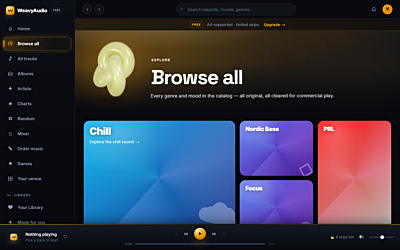 Our newest project is WeavyAudio, a royalty-free background music service and web portal for venues. Here is what it does for businesses and what we built behind it: a Next.js web application, Linux...