
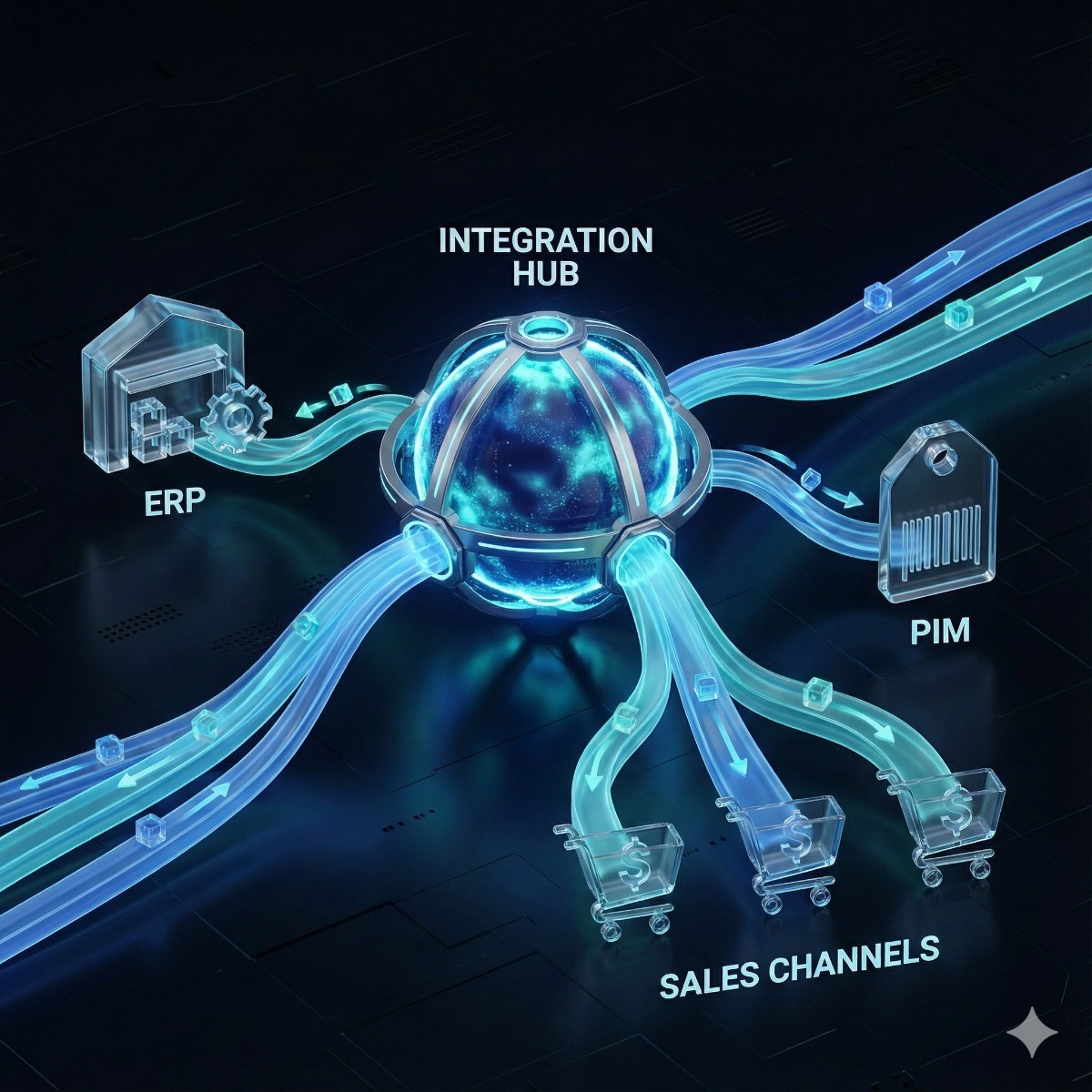
Enterprise Data Synchronization ERP & PIM
Connect Your
Entire Business.
Stop managing your empire on spreadsheets. We build the "Central Brain" of your operations, integrating your ERP and PIM systems directly with your e-commerce channels to sync inventory, prices, and product data in real-time.
ERP Sync (Inventory)
Never oversell again. Our ERP integration service connects your ERP (NetSuite, SAP, Microsoft Dynamics) to your store. When an item sells on Amazon, stock levels update instantly on your website and in your warehouse.
PIM (Product Data)
Managing 10,000 SKUs in Excel is impossible. We implement PIM systems like Akeneo or Pimcore. You edit product specs once, and our integration pushes that data to Shopify, eBay, and your B2B catalog simultaneously.
Omnichannel Logic
Control your pricing globally. We configure logic rules: "Set Shopify price to ERP + 20% margin" or "Only sync items to Amazon if stock > 10." Automated intelligence for your sales channels.
The Architecture.
How we bridge the gap.
Data Mapping
We map the DNA of your business. We match your ERP's "SKU_001" field to your Website's "Product_ID" field, ensuring languages match perfectly across systems.
Middleware Setup
We configure the connector (Celigo, MuleSoft, or Custom API). This "highway" allows data to travel securely between your legacy database and modern cloud apps.
Validation Logic
We build safety nets. If an order comes in with a "State" abbreviation that your ERP doesn't recognize, our system automatically corrects it before sync.
Real-Time Cron
We schedule the heartbeat. Inventory syncs every 5 minutes. Orders sync immediately. Pricing updates every night. Your systems stay in perfect rhythm.
Systems We Connect.
The enterprise ecosystem.
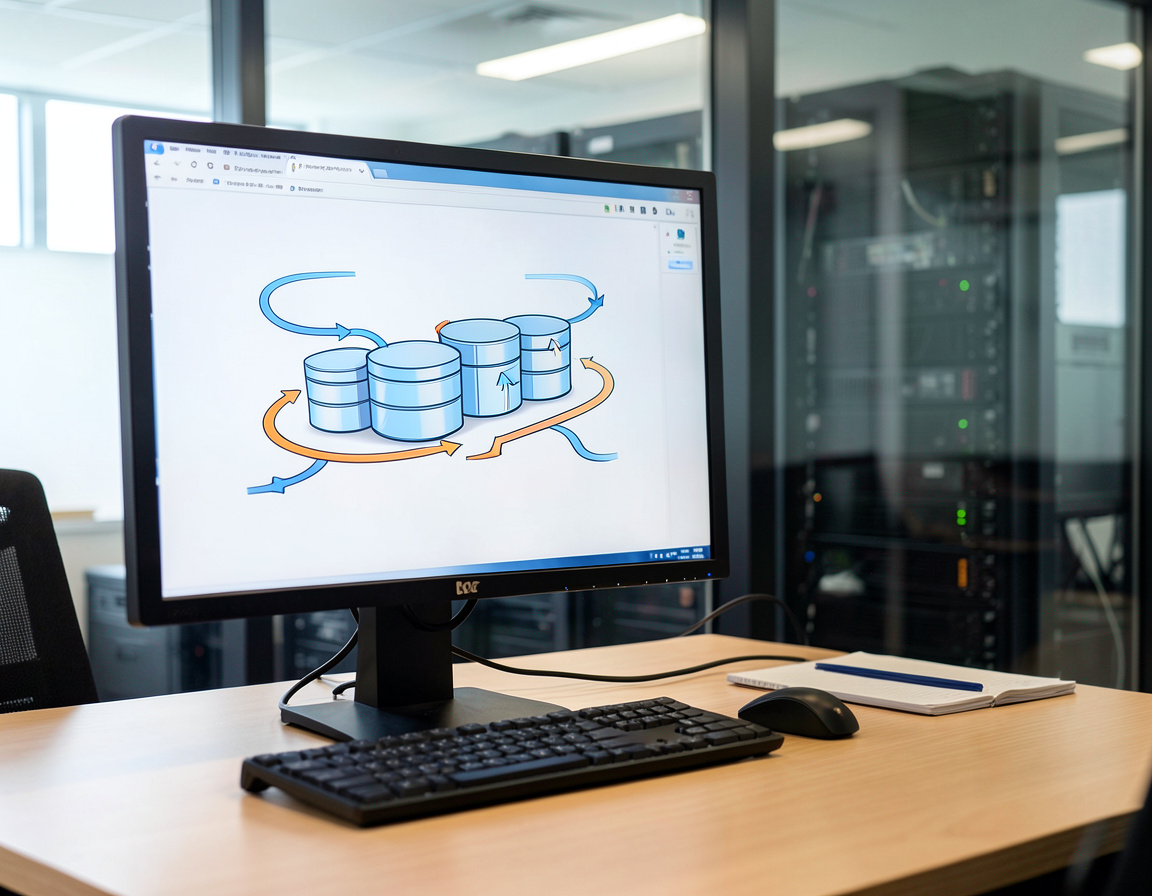


Integration Specs.
Technical protocols.
Common Questions
Why do I need a PIM?
If you have over 500 products or sell on multiple channels (Amazon + Website), a PIM is essential. It ensures your product descriptions and images are consistent everywhere.
Is the sync truly "Real-Time"?
For orders, yes—we use Webhooks for instant transfer. For massive inventory catalogs, we typically sync in batches every 5-15 minutes to prevent server overload.
Product information management versus ERP
The two systems are often confused. An ERP is the source of truth for stock, cost, prices, orders and invoices. Product information management covers everything a customer reads: names, descriptions, attributes, images, translations and channel-specific texts. The store displays both. A PIM implementation makes sense when several people edit product content, when you sell in more than one channel or language, or when supplier data arrives in many different formats.
How a PIM implementation runs
- Data model. Product families and attributes are defined first, including which fields must be complete before a product can be published.
- Import and clean-up. Existing spreadsheets and store data are imported, duplicates merged and units standardized.
- Workflow. Who enriches which fields, and who approves a product before it goes live.
- Channel export. Data flows to the store, marketplaces and feeds in the format each one expects.
Akeneo offers a REST API, and many platforms already have a connector for it. Our Akeneo developer work usually means adapting that connector to your attribute model, or writing one where none fits, then testing it with your largest product families.
Inventory synchronization without overselling
Inventory synchronization looks simple until two channels sell the last unit at the same moment. We agree on one system as the master for stock, send changes as events where the systems allow it, and run a scheduled full comparison to catch anything missed. A small safety buffer on fast-moving items and alerts on failed updates prevent most overselling.
SAP Business One API and middleware solutions
For SAP Business One, web integrations usually go through the Service Layer, its REST-style API, rather than the older desktop interfaces. Whether to use middleware solutions such as an integration platform, a ready-made connector or a small custom service depends on order volume, the number of systems and who will maintain the result. A ready-made connector is quicker to start; a custom service fits unusual business rules better. We explain both options before you commit.
Related services: API integration between business systems, Magento 2 development and scheduled sync scripts and server automation.
NetSuite ecommerce integration
A NetSuite ecommerce integration usually runs through NetSuite's SuiteTalk web services (REST or SOAP), either directly or through middleware such as Celigo. Items, stock levels and prices normally flow from NetSuite to the store, while orders and customers flow back as sales orders. Before any data moves we agree which system owns each field, how tax, discounts and shipping lines are mapped, and what happens when an order fails validation, and the flow is tested with sample orders before go-live.
| Manufacturer | Computer Service Breeze |
|---|









Related Posts
-


 Connecting a store to an ERP is less about the connector than about data decisions: which system owns what, how fields map, how often each kind of data moves and what happens when something fails....
 -
 UPS moved to OAuth, USPS retired its Web Tools APIs and FedEx set a deadline for leaving its legacy Web Services. This guide sums up what changed, the signs of a broken shipping plugin and a...
 -
 Most store launches wait on product data, not on code. This checklist covers the SKUs, variants, attributes, identifiers, photos and shipping details to prepare before an online store is built, and...
 -
 Category and search result pages decide whether shoppers ever reach a product. This guide covers the essentials of product listing page design: filters built on real attributes, mobile filter panels,...
 -
 Integration platforms with ready-made connectors and custom code both connect a store, CRM and accounting system. This guide compares them on volume, pricing, sync rules and failure handling, and...