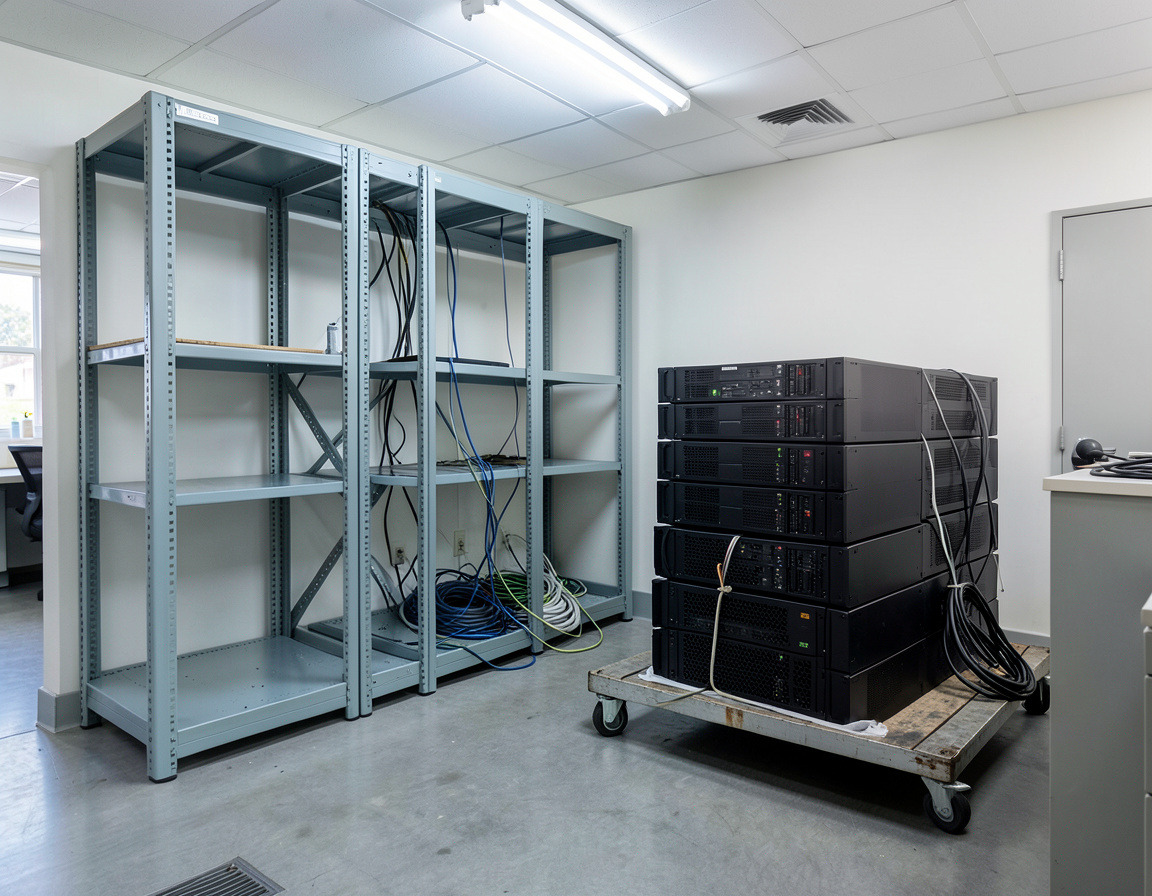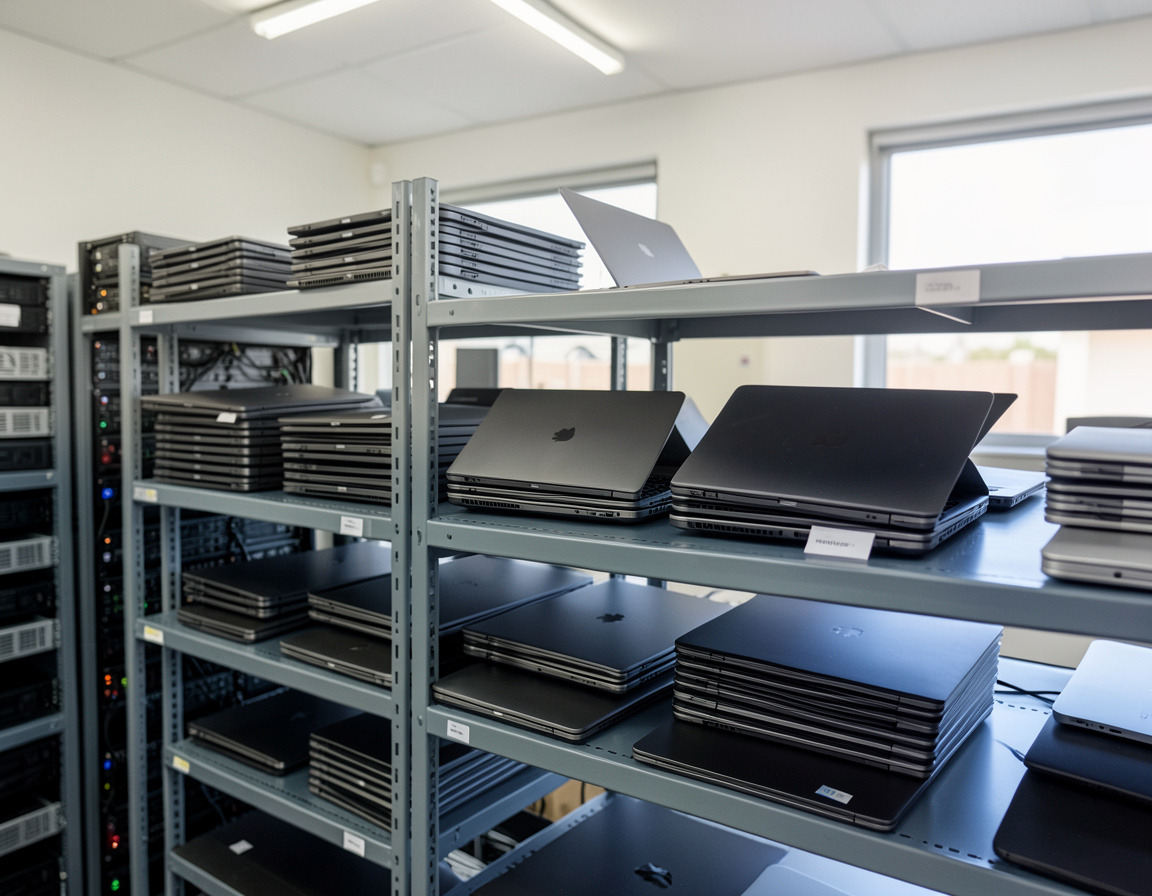



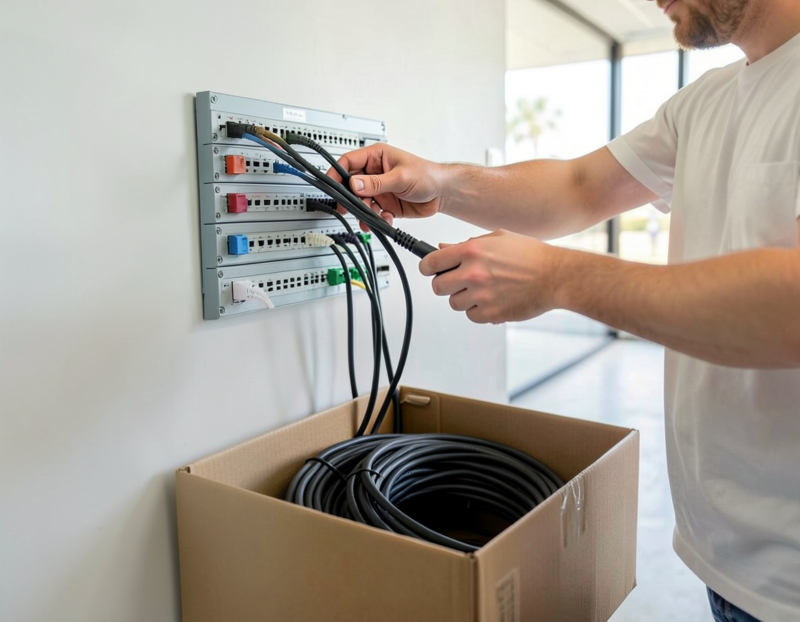
Our step-by-step guide to decommissioning a small server room covers the order of work once a project starts. This article is about the decision that comes before it: who should do the work. Search for data center decommissioning companies in Los Angeles and you get a mix of firms that each handle a different slice of decommissioning IT equipment. Choose the wrong kind and the gaps show up late: data nobody took responsibility for, racks nobody removes, paperwork that does not match what left the building. Here is how to sort the options and what to ask each of them.
Four kinds of firms that call it "decommissioning"
- IT service providers. They know what the servers do: dependencies, migrations, final backups, retiring directory and email roles. Some also remove and dispose of the hardware; others hand that part on.
- IT asset disposition (ITAD) companies. Their work starts once equipment leaves the rack: data sanitization, testing, resale and per-device reporting.
- Electronics recyclers. Their core business is recovering materials. Server recycling in Los Angeles is easy to find, and some recyclers offer drive destruction, but they do not touch the systems themselves.
- Riggers, movers and data center service firms. They handle heavy lifting, de-installation and transport, and usually leave the data to someone else.
Most projects need parts of several. The real question is who coordinates, and who signs for each stage.
Write the scope before you ask for quotes
Data center decommissioning services are hard to compare when every vendor has to guess at the job. A one-page scope makes the quotes comparable:
- Inventory. Racks, servers, storage arrays, switches, firewalls, tape libraries and UPS units, with photos and, where possible, a count of drives rather than just machines.
- What still runs. Which workloads must move first, and where they are going.
- Ownership. What you own, what is leased and has to go back to the lessor, and what belongs to the building or the colocation provider, such as power strips, cabinets or cable trays.
- The site. Access hours, loading dock, freight elevator, parking for a truck and any escort requirements.
- The paperwork you need at the end. An asset reconciliation, drive-level sanitization records, recycling documents and written confirmation that the space was handed back.
Questions to ask any decommissioning partner
About the systems
- Who confirms that nothing still depends on a server before it is switched off, and how long does it stay off before it is removed?
- Who takes the final backup, and who proves it can be restored?
About the data
- Which standard does sanitization follow, and which method is used for hard drives, SSDs, NVMe modules and self-encrypting drives?
- Where does it happen: in the rack, elsewhere on the premises, or at the vendor's facility after transport? How are drives secured in between?
- Is every drive reported by serial number, including hot spares and the failed drives that often sit in a box next to the array?
- If drives are destroyed, is the equipment suitable for SSDs? If the vendor cites a certification, which services and media does it cover? The NAID AAA program, for instance, distinguishes mobile work from facility-based operations.
- For practices that handle health information, will the vendor sign a business associate agreement?
About the hardware
- Who de-racks the equipment, removes rails and cable management, and takes out the racks themselves?
- Where does each type of equipment go next, and which facility processes it? Our article on what happens to recycled office computers lists the recycler questions worth asking.
- How is resale value assessed and credited, when does that figure become final, and what happens to items that fail testing?
About people and paperwork
- Which parts of the job are subcontracted, and to whom? Whose names go on the site access list?
- Can the vendor supply the certificate of insurance that many office buildings and colocation facilities require from contractors before work starts?
- What exactly will you receive at the end, and when? Ask to see a sample report.
Leaving a colocation facility: the contract side
If the equipment sits in a cage or cabinet at a colocation facility, in Downtown LA or elsewhere, the facility contract runs its own clock. Check the notice period for ending the agreement, cross-connects that are billed separately and need their own cancellation, IP address space assigned by the provider, access badges and keys to return, and the condition the space must be in at handback. Plan the physical removal well before the contract end date, leave the facility's own equipment in place, and get the handback confirmed in writing.
Red flags in a decommissioning quote
- A firm price with no inventory behind it.
- No mention of drives, or drives covered by a single line with no per-serial record.
- No answer to where the equipment will be processed.
- A generous value offer for equipment nobody has looked at, with vague terms for revising it.
- A final "certificate" that lists a weight and a date but not a single serial number.
Match the partner to the size of the job
Scale changes the answer. Clearing a hall of racks is a logistics project that needs crews, trucks and a removal schedule measured in weeks. A server closet or a handful of racks mostly needs someone who understands what the servers were doing and can document where every drive went. Be clear about scale when you ask for quotes. If your project sits at the smaller end, tell us the number of racks and devices and we can discuss whether it fits what we do and which parts we would take on.
Frequently asked questions
What does a data center decommissioning company do?
It retires IT equipment from a data center or server room in a controlled way: confirming systems can be shut down, sanitizing or destroying storage, removing and transporting the hardware, sending it for resale or recycling, and documenting each device. Firms differ in which of those steps they perform themselves.
Should drives be destroyed before they leave the data center?
It depends on your policy and on how sensitive the data is. Sanitizing or destroying drives on the premises takes transport out of the risk, while off-site processing relies on sealed containers and a documented handover. Either way, each serial number should be traceable from the rack to its final outcome.
How much notice do we need to give a colocation provider?
Whatever your contract says, and it is worth reading early. Termination and renewal terms decide the date, and a missed notice deadline can mean paying for space you have already emptied.
Who is responsible for the data once equipment leaves our building?
Your business remains accountable for customer information under laws such as California Civil Code section 1798.81, even when a vendor does the work. A contract can assign tasks to the vendor, but records showing what happened to every drive are what protect you.
Shortlisting partners for a server room or a few racks somewhere in Los Angeles County? The way we handle this work is set out on our server decommissioning page, with the storage side on hard drive shredding and data destruction and equipment that may still have value on IT asset disposition. Request a quote with an inventory or a few photos, and you are welcome to put the questions above to us as well.